
Multiple Sclerosis (MS) is a chronic neurological condition that affects the brain, spinal cord, and optic nerves. It develops when the immune system mistakenly attacks myelin, the protective covering around nerve fibres, disrupting the transmission of signals between the brain and the rest of the body. Symptoms can vary widely, ranging from numbness and fatigue to vision problems and difficulty walking.
Recognizing the symptoms of multiple sclerosis and seeking timely medical evaluation can help patients receive an accurate diagnosis and appropriate treatment. Although there is currently no cure for MS, available therapies can help reduce disease activity, manage symptoms, and support quality of life.
What Is Multiple Sclerosis?
Multiple sclerosis is an immune-mediated disease of the central nervous system. Damage to myelin can cause inflammation and lesions in the brain or spinal cord, affecting how nerve signals travel.
The condition affects each person differently. Some people experience episodes of symptoms followed by periods of improvement, while others may develop gradually worsening disability.
The exact cause of MS is not fully understood. A combination of genetic susceptibility and environmental factors is thought to contribute to its development.
Common Symptoms of Multiple Sclerosis
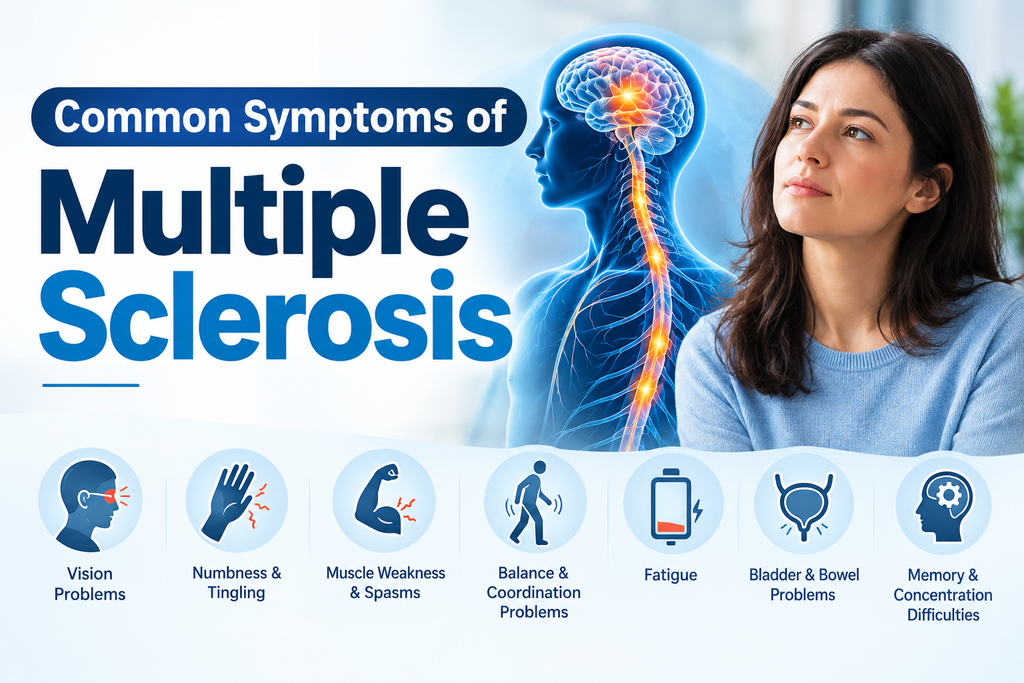
The symptoms of multiple sclerosis depend on the location and extent of nerve damage. They may appear gradually or develop during episodes known as relapses.
1. Numbness and Tingling
Numbness, tingling, or unusual sensations in the hands, feet, arms, legs, or face can be early symptoms of MS. These sensations occur when nerve signals are disrupted.
Persistent or unexplained numbness should be evaluated, particularly when accompanied by other neurological symptoms.
2. Vision Problems
MS can affect the optic nerve and cause a condition called optic neuritis. Symptoms may include blurred vision, reduced colour perception, or pain when moving the eye. Double vision can also occur.
New vision problems should be assessed promptly by a healthcare professional.
3. Muscle Weakness and Spasms
Damage to nerve pathways that control movement may cause weakness, stiffness, or involuntary muscle spasms. These symptoms can make everyday activities, such as climbing stairs or lifting objects, more difficult.
4. Balance and Coordination Problems
Some people with MS experience dizziness, unsteadiness, or difficulty coordinating their movements. These problems can affect walking and increase the risk of falls.
5. Fatigue
Fatigue is a common symptom of multiple sclerosis. It can feel more severe than ordinary tiredness and may interfere with work, exercise, and daily activities.
6. Bladder and Bowel Problems
MS may interfere with the nerve signals that control bladder and bowel function. Symptoms can include urinary urgency, frequent urination, difficulty emptying the bladder, and constipation.
7. Memory and Concentration Difficulties
Some people experience difficulty concentrating, remembering information, or processing information quickly. The severity varies from person to person.
Early Warning Signs of Multiple Sclerosis
Early symptoms of MS may be subtle and can resemble those of other neurological conditions. Possible warning signs include:
- Persistent numbness or tingling without an obvious cause.
- Vision changes or pain with eye movement.
- Unexplained weakness in an arm or leg.
- Difficulty maintaining balance or walking normally.
- Neurological symptoms that last for days or recur over time.
These symptoms do not automatically mean a person has MS. Several other conditions can cause similar problems, so a proper medical assessment is important.
How Is Multiple Sclerosis Diagnosed?
There is no single test that confirms every case of multiple sclerosis. Diagnosis involves reviewing symptoms, performing a neurological examination, and using appropriate investigations to look for evidence of damage in the central nervous system and exclude other conditions.
1. Medical History and Neurological Examination
A neurologist will ask about the onset, duration, and pattern of symptoms, including whether previous episodes have occurred.
The examination may assess muscle strength, reflexes, sensation, coordination, walking ability, and eye movements.
2. MRI of the Brain and Spinal Cord
Magnetic resonance imaging (MRI) is an important investigation for MS. It can identify lesions associated with inflammation and damage to myelin in the brain and spinal cord.
The location and appearance of these lesions help the neurologist determine whether the findings are consistent with MS.
3. Lumbar Puncture, When Needed
In selected cases, a lumbar puncture may be performed to collect cerebrospinal fluid. Testing this fluid for certain immune markers, such as oligoclonal bands, can support the diagnosis.
4. Blood Tests to Rule Out Other Conditions
Blood tests may be recommended to investigate other possible causes of neurological symptoms, including vitamin B12 deficiency, thyroid disorders, and certain infections or autoimmune conditions.
The diagnosis is made by considering the overall clinical picture and established diagnostic criteria.
Treatment Options for Multiple Sclerosis
Although MS cannot currently be cured, treatment can reduce disease activity, manage relapses, and help control symptoms. The treatment plan depends on the type of MS, MRI findings, symptoms, and the patient’s overall health.

1. Disease-Modifying Therapies
Disease-modifying therapies are medicines designed to reduce relapses and new inflammatory activity in the central nervous system. Some treatments can also slow the accumulation of disability.
The choice of medicine depends on disease activity, potential benefits, risks, and individual circumstances. Regular monitoring is often necessary.
2. Treatment for Relapses
A significant MS relapse may be treated with corticosteroids to reduce inflammation and help symptoms recover more quickly. These medicines are prescribed when appropriate after a clinical assessment.
Not every worsening of symptoms is a relapse. Infection, heat, or other factors can temporarily worsen existing symptoms and may require a different approach.
3. Medicines for Symptom Management
Additional treatments may help manage specific symptoms, including muscle spasms, neuropathic pain, bladder problems, or fatigue.
Treatment is individualized because a medicine that helps one symptom may not be suitable for every patient.
4. Physical Therapy and Rehabilitation
Physical therapy can help improve mobility, balance, flexibility, and muscle strength. Occupational therapy may also help people adapt daily activities and maintain independence.
Rehabilitation is often an important part of long-term MS management.
When Should You See a Neurologist?
Consult a neurologist if you experience persistent or unexplained neurological symptoms, especially when they involve vision, sensation, muscle strength, or coordination.
Seek medical evaluation for:
- Recurrent numbness or tingling.
- New vision problems.
- Unexplained muscle weakness.
- Difficulty walking or maintaining balance.
- Neurological symptoms that persist or return.
Important: Sudden facial drooping, weakness on one side of the body, difficulty speaking, or sudden vision loss may indicate a medical emergency, including stroke. Seek emergency medical care immediately rather than assuming the symptoms are caused by MS.
Frequently Asked Questions
1. What are the first symptoms of multiple sclerosis?
Early symptoms may include numbness, tingling, vision problems, limb weakness, fatigue, or difficulty with balance. Symptoms vary, and these signs can also occur in other conditions.
2. How is multiple sclerosis diagnosed?
Diagnosis involves a medical history, neurological examination, MRI of the brain and spinal cord, and sometimes cerebrospinal fluid testing and blood tests to rule out other conditions.
3. Can multiple sclerosis be cured?
There is currently no cure for MS. However, disease-modifying therapies and symptom-management strategies can reduce disease activity and help maintain quality of life.
4. What treatments are available for MS?
Treatment may include disease-modifying medicines, corticosteroids for certain relapses, medicines for specific symptoms, and physical rehabilitation.
5. Can multiple sclerosis affect vision?
Yes. MS can affect the optic nerve and cause blurred vision, reduced colour perception, pain with eye movement, or double vision.
6. When should I consult a neurologist for possible MS?
Consult a neurologist for persistent or recurring unexplained numbness, weakness, vision changes, or balance problems. Sudden neurological symptoms require emergency assessment.
Conclusion
Multiple sclerosis is a complex neurological condition that can affect vision, sensation, movement, balance, and energy levels. Recognizing its possible symptoms and obtaining an accurate diagnosis are important steps toward appropriate care.
MRI scans, neurological examinations, and selected additional tests help doctors distinguish MS from other conditions. Although there is no current cure, disease-modifying therapies, symptom management, and rehabilitation can help many people manage the condition and maintain their quality of life.
If you experience persistent or unexplained neurological symptoms, consult a qualified neurologist for an appropriate evaluation and personalized care plan.