
Peripheral Neuropathy is a condition that develops when nerves outside the brain and spinal cord become damaged or irritated. It commonly affects the feet and hands and can cause numbness, tingling, burning pain, weakness, and changes in sensation.
The symptoms may develop gradually and can sometimes be mistaken for normal fatigue or aging. However, recognizing the early signs of peripheral neuropathy is important because identifying and treating the underlying cause may help prevent further nerve damage.
What Is Peripheral Neuropathy?
Peripheral neuropathy occurs when one or more peripheral nerves are damaged. These nerves carry messages between the brain, spinal cord, muscles, skin, and other parts of the body.
Depending on the nerves affected, symptoms may involve sensation, movement, or automatic body functions.
Peripheral neuropathy most commonly affects the feet and lower legs first, although the hands and arms can also be involved.
Common Symptoms of Peripheral Neuropathy
The symptoms can vary depending on which nerves are affected. Common warning signs include:
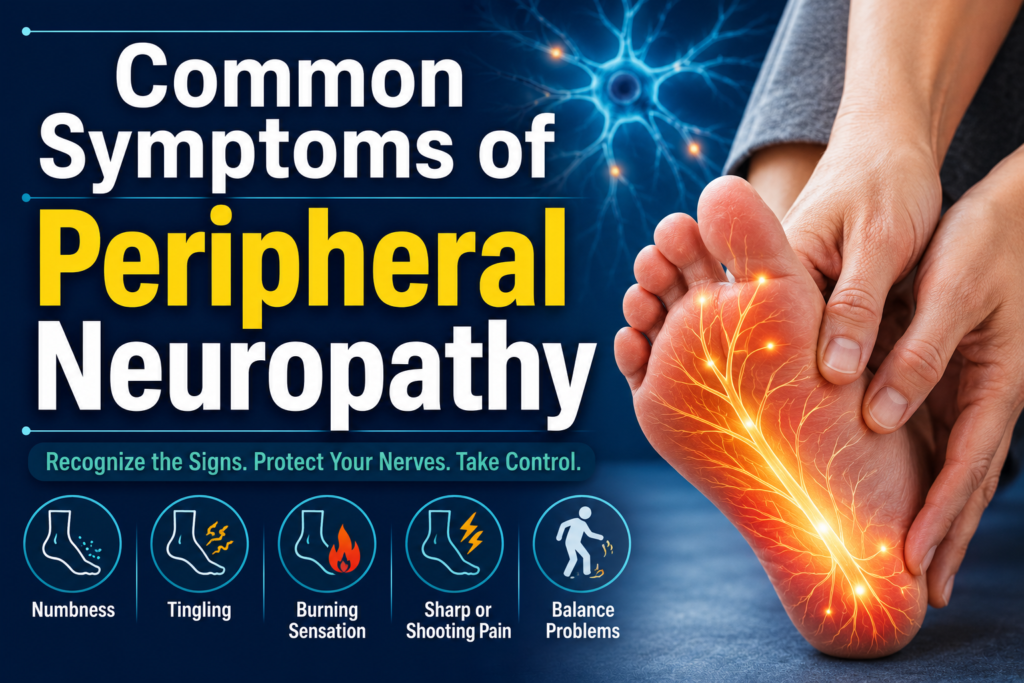
1. Numbness and Reduced Sensation
Numbness in the feet, toes, fingers, or hands is one of the most common symptoms. Some people may have difficulty feeling temperature, pressure, or minor injuries.
Reduced sensation can increase the risk of unnoticed cuts, burns, or foot injuries.
2. Tingling or Pins-and-Needles
A persistent pins-and-needles sensation may occur in the feet or hands. It can feel like small electric shocks, prickling, or crawling under the skin.
Occasional tingling can happen when a nerve is temporarily compressed. However, recurrent or persistent tingling deserves medical evaluation.
3. Burning or Shooting Pain
Nerve damage can cause burning, stabbing, or shooting pain. Some people describe it as an electric shock-like sensation.
The pain may become more noticeable at night and can interfere with sleep.
4. Increased Sensitivity to Touch
Peripheral neuropathy can make normally harmless sensations uncomfortable or painful. Even light pressure from clothing, bedsheets, or footwear may cause discomfort.
This is known as increased sensitivity or neuropathic pain.
5. Muscle Weakness
When motor nerves are affected, muscle weakness may develop. You may notice difficulty:
- Walking normally
- Climbing stairs
- Opening jars
- Holding objects
- Moving the feet or hands
Progressive weakness should be evaluated by a doctor.
6. Balance and Coordination Problems
Damage to sensory nerves can affect your awareness of where your feet are positioned. This may lead to unsteadiness, difficulty walking, or an increased risk of falls.
Balance problems are particularly important to address in older adults.
What Causes Peripheral Neuropathy?
Peripheral neuropathy can have many causes. Some of the most common include:
Diabetes
Diabetes is a major cause of peripheral neuropathy. Persistently high blood sugar can damage nerves over time, particularly those in the feet and legs.
Good blood sugar control and regular medical monitoring can help reduce the risk of nerve complications.
Vitamin B12 Deficiency
Vitamin B12 is important for normal nerve function. A deficiency can cause numbness, tingling, weakness, and balance problems.
Alcohol-Related Nerve Damage
Long-term excessive alcohol consumption can contribute to nerve damage, partly through direct effects on nerves and nutritional deficiencies.
Certain Medications
Some medications, including certain chemotherapy drugs, can cause peripheral nerve damage as a side effect.
Kidney or Liver Disease
Chronic kidney or liver problems can sometimes contribute to nerve dysfunction because of metabolic changes in the body.
Autoimmune Conditions
Certain autoimmune diseases can affect peripheral nerves and cause neuropathy.
Nerve Injuries or Compression
Trauma, surgery, repetitive pressure, or conditions that compress a nerve can cause symptoms in the affected area.
In some people, no specific cause is identified. This is called idiopathic peripheral neuropathy.
When Should You See a Neurologist?
You should consider consulting a neurologist if you experience:
- Persistent numbness or tingling
- Burning or shooting pain
- Progressive muscle weakness
- Difficulty walking
- Frequent falls
- Loss of sensation in the feet or hands
- Symptoms that interfere with sleep
- Symptoms that are gradually spreading
Early evaluation can help determine whether the symptoms are caused by peripheral neuropathy or another neurological condition.
How Is Peripheral Neuropathy Diagnosed?
Diagnosis usually begins with a detailed medical history and neurological examination.
Your doctor may assess:
- Muscle strength
- Reflexes
- Sensation
- Coordination
- Balance
- Walking pattern
Depending on your symptoms, additional tests may include blood tests to check blood sugar, vitamin levels, thyroid function, and other possible causes.
A Nerve Conduction Study (NCS) and Electromyography (EMG) may also be recommended to assess how well nerves and muscles are functioning.
Imaging tests may be considered when a spinal problem or nerve compression is suspected.
Treatment for Peripheral Neuropathy
Treatment depends on the underlying cause and the type and severity of nerve damage.

Treating the Underlying Cause
For example, people with diabetes may need better blood sugar management, while someone with vitamin B12 deficiency may require appropriate supplementation.
Medicines
Doctors may prescribe medicines specifically for neuropathic pain when burning, shooting, or severe nerve pain is present.
Treatment should be individualized, and medicines should not be started or stopped without medical advice.
Physical Therapy
Physical therapy may help improve:
- Muscle strength
- Balance
- Mobility
- Coordination
It can be particularly useful when neuropathy has caused weakness or difficulty walking.
Lifestyle Changes
Healthy habits can support nerve health. These include:
- Maintaining healthy blood sugar levels
- Eating a balanced diet
- Exercising regularly
- Avoiding excessive alcohol
- Not smoking
- Maintaining a healthy weight
- Checking the feet regularly
People with reduced sensation should take extra care to protect their feet from cuts, burns, and pressure injuries.
Can Peripheral Neuropathy Be Prevented?
Not every case can be prevented, but managing known risk factors can reduce the likelihood of nerve damage.
People with diabetes should monitor their blood sugar and have regular medical checkups. A balanced diet can help prevent certain nutritional deficiencies, while limiting alcohol and avoiding tobacco can support overall nerve health.
Early attention to persistent symptoms is also important because some causes of neuropathy are treatable.
Frequently Asked Questions
What are the first symptoms of peripheral neuropathy?
Early symptoms often include tingling, numbness, burning sensations, or increased sensitivity in the feet or hands.
Is peripheral neuropathy serious?
It can become serious if the underlying cause is not addressed. Reduced sensation can also increase the risk of unnoticed injuries and falls.
Can diabetes cause peripheral neuropathy?
Yes. Long-term high blood sugar can damage peripheral nerves and is one of the most common causes of peripheral neuropathy.
Can peripheral neuropathy be cured?
Treatment depends on the underlying cause. Some causes can be treated or controlled, which may improve symptoms or prevent further nerve damage.
When should I see a neurologist?
See a neurologist if numbness, tingling, burning pain, weakness, balance problems, or other nerve-related symptoms persist, worsen, or interfere with daily activities.
Conclusion
Recognizing the symptoms of peripheral neuropathy can help you seek medical attention before nerve damage becomes more advanced. Numbness, tingling, burning pain, weakness, increased sensitivity, and balance problems are important warning signs that should not be ignored when they persist or worsen.
Peripheral neuropathy can result from diabetes, vitamin deficiencies, medications, alcohol use, autoimmune conditions, nerve compression, and several other causes. A neurologist can evaluate your symptoms, identify the possible cause, and recommend an appropriate treatment plan.
If you have persistent numbness, burning, tingling, or weakness in your hands or feet, timely neurological evaluation can help protect your nerve health and improve your quality of life.