Parkinson’s Disease is a progressive neurological condition that primarily affects movement, but it can also cause several non-movement symptoms. The condition often develops gradually, and some of its earliest signs may be subtle enough to overlook or mistake for normal aging.
Recognizing potential warning signs can help people seek appropriate medical evaluation sooner. Although experiencing one of these symptoms does not necessarily mean you have Parkinson’s Disease, a combination of persistent or worsening symptoms should be discussed with a qualified neurologist.
What Is Parkinson’s Disease?
Parkinson’s Disease is a disorder of the nervous system that affects areas of the brain involved in controlling movement. It is associated with the loss or dysfunction of dopamine-producing nerve cells in a part of the brain called the substantia nigra.
Dopamine is an important chemical messenger involved in smooth and coordinated movement. As dopamine levels decrease, people may gradually develop symptoms such as tremors, stiffness, slowed movements, and changes in balance.
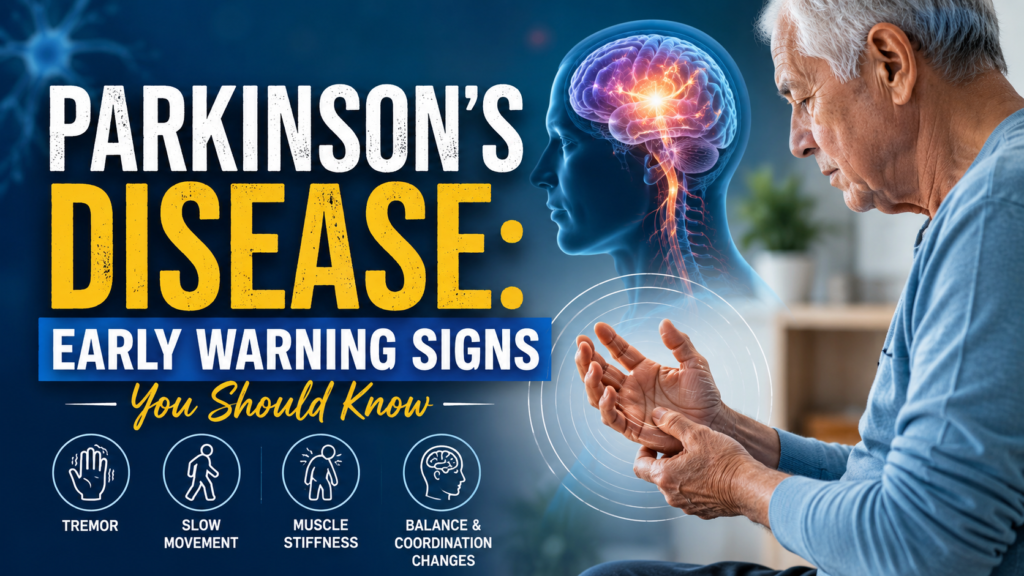
However, Parkinson’s Disease is not limited to movement problems. Some people experience changes in their sense of smell, sleep, bowel habits, mood, speech, or energy levels. These symptoms may appear before noticeable movement changes.
What Causes Parkinson’s Disease?
The exact cause of Parkinson’s Disease is not fully understood. Researchers believe that a combination of genetic, environmental, and biological factors may contribute to its development.
Age is an important risk factor, although younger people can also develop Parkinson’s Disease. A family history may increase risk in some individuals, but having a relative with Parkinson’s does not mean that a person will definitely develop the condition.
Because the causes are complex, researchers continue to study how genetics, environmental exposures, aging, and changes within the nervous system may contribute to the disease.
Early Warning Signs of Parkinson’s Disease
The early symptoms of Parkinson’s Disease can vary considerably from person to person. Some people first notice movement changes, while others experience non-motor symptoms.
1. Tremor or Shaking
A tremor is one of the symptoms most commonly associated with Parkinson’s Disease. A Parkinsonian tremor often occurs when a limb is relaxed or at rest and may initially affect one side of the body.
For example, a person may notice subtle shaking in one hand while sitting or resting. The tremor may become more noticeable during periods of stress or fatigue.
However, not every tremor indicates Parkinson’s Disease. Tremors can have many possible causes, so proper neurological evaluation is important.
2. Slower Movements
Another important symptom is bradykinesia, which means slowness of movement.
Everyday activities may gradually take longer than they used to. A person might notice difficulty:
- Getting dressed
- Buttoning clothes
- Writing
- Getting out of a chair
- Walking at their usual pace
- Performing other fine motor activities
Family members may sometimes notice these changes before the individual recognizes them.
3. Muscle Stiffness
Muscle rigidity can cause stiffness in the arms, legs, neck, or shoulders. The stiffness may make normal movements feel more difficult or uncomfortable.
Some people initially attribute this symptom to physical activity, aging, or joint problems. However, persistent stiffness accompanied by other neurological symptoms deserves medical attention.
4. Changes in Walking and Balance
Changes in walking can occur as Parkinson’s Disease progresses. A person may begin taking smaller steps, walk more slowly, or experience difficulty initiating movement.
Reduced arm movement while walking can also occur. Some people may experience difficulty turning, changing direction, or maintaining balance.
Repeated falls or significant balance problems should always be medically assessed because they can have many neurological and non-neurological causes.
5. Changes in Handwriting
A noticeable change in handwriting can sometimes be an early sign. People with Parkinson’s Disease may develop micrographia, in which handwriting becomes unusually small or cramped.
Someone may notice that their handwriting has gradually become smaller, less clear, or more difficult to control.
Changes in handwriting alone do not confirm Parkinson’s Disease, but they can be useful information for a doctor when considered alongside other symptoms.
6. Reduced Sense of Smell
A reduced ability to smell, known as hyposmia, can occur in some people before the more recognizable movement symptoms of Parkinson’s Disease appear.
A person may have difficulty detecting familiar smells or notice that foods seem less aromatic than before.
Reduced smell has numerous possible causes, including infections, allergies, nasal problems, and other conditions. Therefore, it should not automatically be interpreted as a sign of Parkinson’s Disease.
7. Changes in Facial Expression
Some people may gradually develop reduced facial movements. They may blink less frequently or appear less expressive than they were previously.
This can happen because Parkinson’s Disease affects automatic movements as well as voluntary movement. Family members may notice a change in facial expression before the person becomes aware of it.
8. Softer or Changed Speech
Changes in speech can also occur. A person’s voice may gradually become softer, quieter, or less expressive.
Other changes may include speaking more quickly, repeating words, or having difficulty maintaining normal speech volume.
Speech changes can have many causes, so a neurological evaluation can help determine whether they are related to Parkinson’s Disease or another condition.
9. Sleep Problems
Sleep changes may occur in Parkinson’s Disease and, in some cases, can develop before significant movement symptoms.
Some individuals experience unusual movements or behaviors while dreaming, while others may have insomnia, excessive daytime sleepiness, or other changes in sleep quality.
Because sleep disorders are common and have many causes, these symptoms need to be considered alongside a person’s overall health and neurological history.
10. Constipation and Other Non-Motor Symptoms
Parkinson’s Disease can affect more than movement. Some people experience non-motor symptoms such as:
- Constipation
- Fatigue
- Changes in mood
- Depression or anxiety
- Changes in blood pressure
- Sleep disturbances
- Reduced sense of smell
These symptoms are not specific to Parkinson’s Disease and may occur for many other reasons. However, when several symptoms appear together, they can provide useful information during a neurological assessment.
Parkinson’s Disease Symptoms vs Normal Aging
Some symptoms associated with Parkinson’s Disease can resemble changes that occur with normal aging. The key issue is often whether the symptoms are persistent, progressive, or occurring together.
For example, occasional stiffness after physical activity is common. Persistent stiffness combined with slowed movement may require further evaluation.
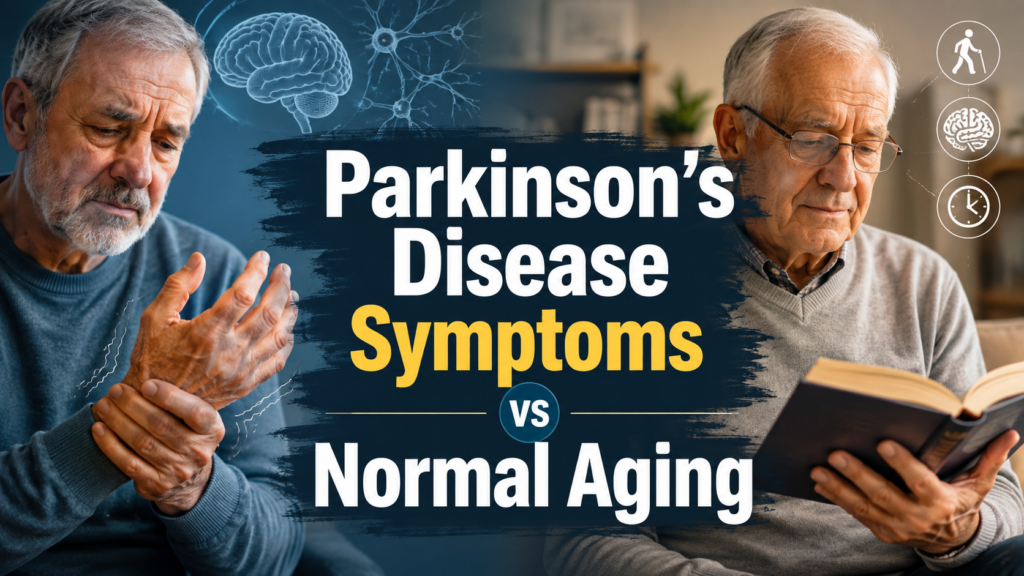
Similarly, occasional changes in handwriting may not be concerning, but progressively smaller handwriting accompanied by tremor or movement problems may warrant medical assessment.
Rather than trying to diagnose yourself, it is better to discuss persistent or unexplained changes with a healthcare professional.
When Should You See a Neurologist?
Consider consulting a neurologist if you notice persistent or progressively worsening symptoms such as:
- Tremor, particularly when the limb is at rest
- Increasing muscle stiffness
- Noticeably slower movements
- Changes in walking or balance
- Progressive changes in handwriting
- Reduced facial expression
- Persistent changes in speech
- Multiple non-motor symptoms occurring together
A neurological evaluation can help determine whether the symptoms are related to Parkinson’s Disease or another condition.
Early consultation does not necessarily mean that a person has Parkinson’s Disease. Instead, it provides an opportunity to identify the underlying cause and discuss appropriate management.
How Is Parkinson’s Disease Diagnosed?
There is no single test that confirms every case of Parkinson’s Disease. Diagnosis is generally based on a person’s medical history, symptoms, and neurological examination.
During an evaluation, a neurologist may assess:
- Muscle movement and stiffness
- Tremor
- Walking pattern
- Balance
- Coordination
- Reflexes
- Speech
- Other neurological functions
The doctor may also review medications and medical conditions that could produce similar symptoms.
In some situations, additional investigations or imaging may be recommended to rule out other causes or support the overall clinical assessment.
Can Parkinson’s Disease Be Treated?
Although there is currently no cure that eliminates Parkinson’s Disease, treatment can help manage symptoms and support daily functioning and quality of life.
Treatment may include medications that improve dopamine-related signaling or help control specific symptoms. Depending on the individual’s needs, doctors may also recommend:
- Physical therapy
- Regular, appropriate exercise
- Occupational therapy
- Speech and swallowing therapy
- Balance and mobility training
- Lifestyle and supportive measures
For selected patients with more advanced symptoms, specialized treatment options may be considered by an appropriate neurological team.
Treatment should always be individualized because symptoms, progression, medication response, and daily needs differ from one person to another.
Can Parkinson’s Disease Be Prevented?
There is currently no guaranteed method for preventing Parkinson’s Disease.
However, maintaining overall brain and physical health is beneficial. Regular physical activity, adequate sleep, a balanced diet, management of other health conditions, and avoiding harmful environmental exposures where possible can support general well-being.
These healthy habits should not be considered a guaranteed way to prevent Parkinson’s Disease, but they can contribute to overall health and functional ability.
Frequently Asked Questions About Parkinson’s Disease
What is usually the first sign of Parkinson’s Disease?
There is no single first symptom for everyone. A resting tremor, slowed movement, stiffness, or reduced sense of smell may occur early in some people.
Is shaking always a sign of Parkinson’s Disease?
No. Tremors can have many causes. A neurological evaluation is necessary to determine the likely cause of persistent or unusual shaking.
Can Parkinson’s Disease start with non-movement symptoms?
Yes. Some people experience non-motor symptoms, such as reduced sense of smell, constipation, or sleep changes, before noticeable movement problems develop.
At what age does Parkinson’s Disease usually occur?
Parkinson’s Disease becomes more common with increasing age, although younger-onset forms can occur. Age alone does not determine whether someone will develop the condition.
How is Parkinson’s Disease diagnosed?
Diagnosis is primarily clinical and involves reviewing symptoms, medical history, and neurological examination findings. Additional tests may be used when necessary to evaluate other possible causes.
Can Parkinson’s Disease be treated?
Yes. While there is currently no cure, several treatments can help control symptoms and improve daily functioning. Treatment is tailored to the individual’s symptoms and needs.
Conclusion
Parkinson’s Disease can develop gradually, and its early warning signs are not always obvious. Tremor, stiffness, slowed movement, changes in walking, smaller handwriting, reduced sense of smell, speech changes, sleep problems, and other non-motor symptoms may occur at different stages.
Having one of these symptoms does not automatically mean that you have Parkinson’s Disease. However, persistent or progressively worsening symptoms—especially when several occur together—should not be ignored.
If you or someone you know is experiencing unexplained movement or neurological changes, consulting a qualified neurologist can help identify the cause and determine whether further evaluation or treatment is needed.
Related Blogs
Frequent Dizziness | Early Signs of Stroke | Common Migraine Triggers| Common Causes of Seizures| Migraine Treatment Options| Causes of Numbness| Burning Sensation in Feet| Symptoms of Peripheral Neuropathy