
Migraines are more than just severe headaches. They are a neurological condition that can cause intense pain, nausea, sensitivity to light and sound, and difficulty performing daily activities. While migraine symptoms vary from person to person, many attacks are linked to specific triggers. Understanding these common migraine triggers can help reduce the frequency and severity of migraine episodes.
What Are Migraine Triggers?
Migraine triggers are factors that may increase the likelihood of a migraine attack. These triggers do not directly cause migraines but can activate underlying neurological processes that lead to symptoms. Identifying and avoiding personal triggers is an important part of migraine management.
Why Identifying Common Migraine Triggers Matters
Recognizing your migraine triggers can help you:
- Reduce the number of migraine attacks
- Improve your quality of life
- Better manage symptoms
- Decrease dependence on medications
- Prevent disruptions to work and daily activities
Keeping track of potential triggers can provide valuable insights into your migraine patterns.
Common Migraine Triggers Everyone Should Know
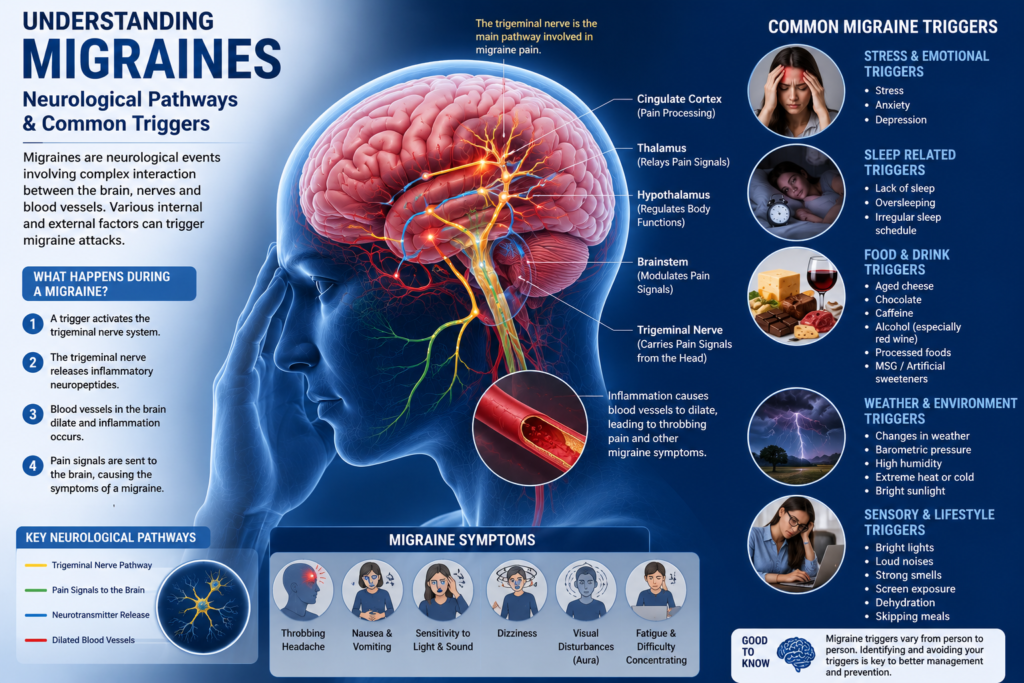
1. Stress and Anxiety
Stress is one of the most frequently reported migraine triggers. Work pressure, family responsibilities, financial concerns, and emotional stress can contribute to migraine attacks. Even the sudden release of stress after a busy period may trigger a migraine in some individuals.
2. Lack of Sleep
Poor sleep quality or inadequate sleep can significantly increase migraine risk. Sleeping too little or too much may disrupt the body’s natural rhythm and trigger headaches.
To reduce risk:
- Maintain a consistent sleep schedule
- Avoid screens before bedtime
- Create a relaxing sleep environment
3. Certain Foods and Beverages
Some foods and drinks are known to trigger migraines in susceptible individuals. Common examples include:
- Aged cheeses
- Processed meats
- Chocolate
- Artificial sweeteners
- Foods containing MSG
- Excessive caffeine
- Alcohol, especially red wine
Keeping a food diary may help identify dietary triggers.
4. Skipping Meals
Missing meals can cause blood sugar levels to drop, which may trigger migraines. Irregular eating habits are commonly associated with migraine attacks.
Try to:
- Eat meals at regular intervals
- Avoid prolonged fasting
- Include balanced nutrition throughout the day
5. Dehydration
Even mild dehydration can trigger migraine symptoms. Not drinking enough water, excessive sweating, or illness can contribute to dehydration-related headaches.
Simple prevention tips include:
- Drinking water regularly throughout the day
- Increasing fluid intake during hot weather
- Limiting excessive caffeine consumption
6. Hormonal Changes
Hormonal fluctuations are a common migraine trigger, particularly among women. Changes in estrogen levels during menstruation, pregnancy, or menopause may increase migraine frequency.
Many women experience migraines just before or during their menstrual cycle due to hormonal changes.
7. Bright Lights and Excessive Screen Time
Exposure to bright lights, flashing lights, and prolonged screen use can trigger migraines in some individuals.
Helpful strategies include:
- Using screen filters
- Taking regular breaks from digital devices
- Wearing sunglasses outdoors
8. Strong Smells
Certain odors may provoke migraines, including:
- Perfumes
- Cigarette smoke
- Cleaning chemicals
- Paint fumes
People with migraines often become more sensitive to smells during an attack.
9. Weather Changes
Changes in weather conditions can affect migraine sufferers. Common environmental triggers include:
- Sudden temperature changes
- High humidity
- Storms
- Changes in barometric pressure
Although weather cannot be controlled, recognizing patterns may help you prepare for potential migraine episodes.
10. Loud Noises
Excessive noise exposure can overstimulate the nervous system and trigger migraines. Concerts, construction sites, traffic noise, and crowded environments may contribute to symptoms.
How to Identify Your Personal Migraine Triggers
Since migraine triggers vary among individuals, identifying your specific triggers is essential.
Keep a Migraine Diary
Record details such as:
- Foods consumed
- Sleep patterns
- Stress levels
- Weather conditions
- Migraine symptoms and duration
Over time, patterns may become clear.
Monitor Lifestyle Habits
Pay attention to:
- Hydration levels
- Exercise routines
- Work schedules
- Screen exposure
Small lifestyle adjustments can sometimes make a significant difference.
Tips to Prevent Migraine Attacks
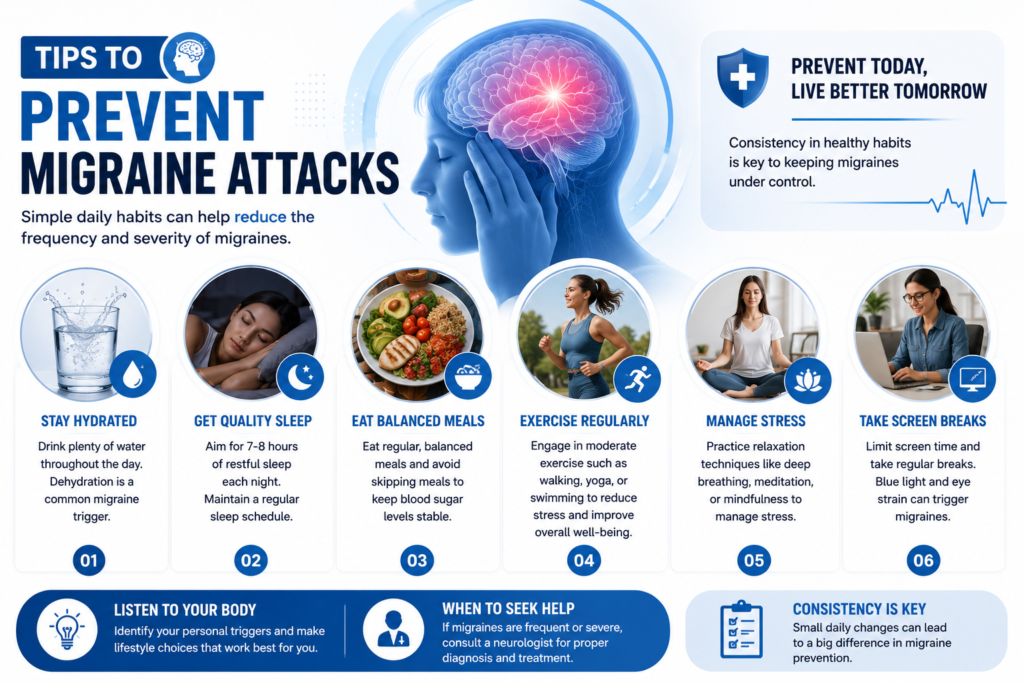
While migraines cannot always be prevented, the following habits may help reduce attacks:
- Maintain a regular sleep schedule
- Stay hydrated
- Eat balanced meals on time
- Practice stress management techniques
- Exercise regularly
- Limit exposure to known triggers
- Take breaks from screens and bright lights
When Should You See a Neurologist?
You should seek medical evaluation if:
- Migraines occur frequently
- Headaches interfere with daily activities
- Symptoms suddenly change
- Over-the-counter medications are ineffective
- You experience neurological symptoms such as weakness, vision changes, or speech difficulties
Early diagnosis can help determine the most effective treatment plan.
Expert Migraine Care with Dr. Himank Goyal
Migraine management often requires a personalized approach. Dr. Himank Goyal provides comprehensive neurological evaluation and treatment for patients experiencing migraines and other neurological conditions.
If you are struggling with recurring migraines, consulting the Best Neurologist in Delhi can help identify triggers, develop preventive strategies, and improve long-term symptom control. A tailored treatment plan can significantly enhance your quality of life and reduce the impact of migraines on daily activities.
Conclusion
Understanding common migraine triggers is one of the most effective ways to manage migraines and reduce the frequency of attacks. Factors such as stress, lack of sleep, dehydration, certain foods, hormonal changes, and environmental conditions can all contribute to migraine episodes.
By identifying personal triggers and making appropriate lifestyle adjustments, many people can achieve better migraine control. If migraines are frequent or severe, seeking guidance from an experienced neurologist can help you receive the right diagnosis and treatment.