
Dr Himank Goyal

Stroke Recovery: What Patients Can Expect – Stages, Rehabilitation, Timeline & Treatment

A stroke can bring sudden changes to a person’s movement, speech, memory, and ability to perform everyday activities. However, recovery is possible, and many patients regain important skills with appropriate medical care and rehabilitation. The recovery journey is different for everyone, depending on the severity of the stroke, the area of the brain affected, overall

Stroke Recovery: What Patients Can Expect – Stages, Rehabilitation, Timeline & Treatment Read More »

Memory Loss_ Aging or Dementia_

Memory Loss: Normal Aging or Dementia?

Memory Loss is something many people experience as they grow older. Forgetting someone’s name, misplacing keys, or occasionally struggling to remember information can be a normal part of aging. However, when memory problems become frequent, affect daily activities, or gradually worsen, they may indicate an underlying neurological condition such as dementia. Understanding the difference between

Memory Loss: Normal Aging or Dementia? Read More »

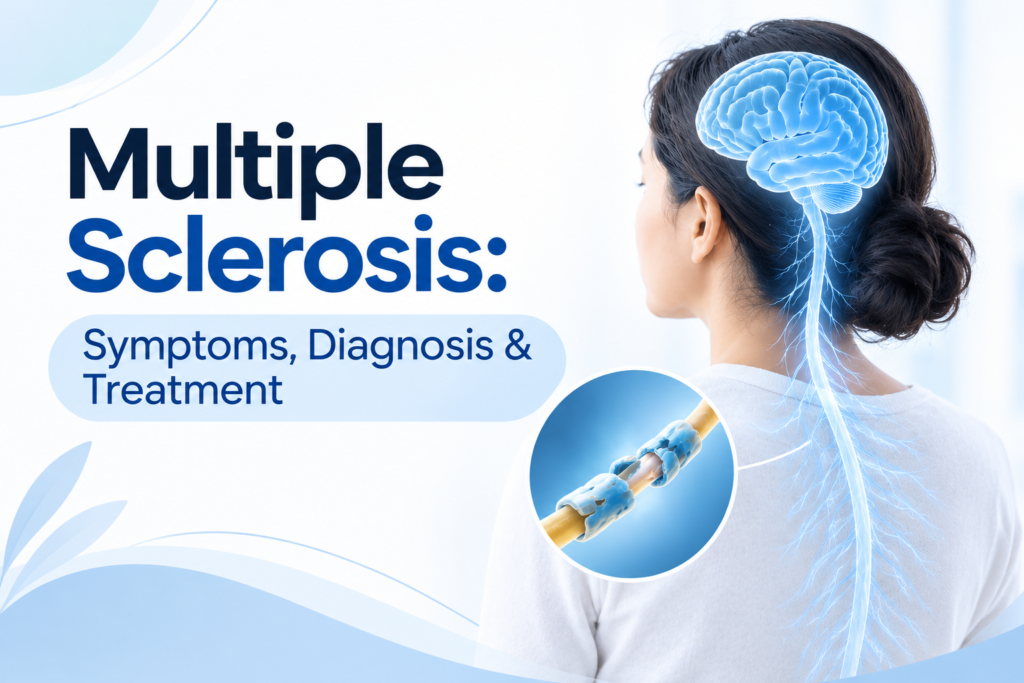
Multiple Sclerosis: Symptoms, Diagnosis & Treatment

Multiple Sclerosis (MS) is a chronic neurological condition that affects the brain, spinal cord, and optic nerves. It develops when the immune system mistakenly attacks myelin, the protective covering around nerve fibres, disrupting the transmission of signals between the brain and the rest of the body. Symptoms can vary widely, ranging from numbness and fatigue

Multiple Sclerosis: Symptoms, Diagnosis & Treatment Read More »

Epilepsy Treatment: Medication and Beyond

Epilepsy Treatment involves more than controlling seizures with medication. Although anti-seizure medicines are the primary treatment for many people, other options, including lifestyle changes, dietary therapy, epilepsy surgery, and nerve stimulation, may help selected patients achieve better seizure control. Epilepsy is a neurological condition that can affect a person’s daily activities, independence, and quality of

Epilepsy Treatment: Medication and Beyond Read More »

Myths and Facts About Epilepsy

Myths and Facts About Epilepsy: 10 Common Misconceptions

Myths and Facts About Epilepsy are important to understand because misinformation can create fear, discrimination, and unnecessary stigma around this neurological condition. Epilepsy affects people of different ages and can influence their daily activities, education, work, and relationships. However, with appropriate medical care and awareness, many people with epilepsy can manage their condition and lead

Myths and Facts About Epilepsy: 10 Common Misconceptions Read More »

Parkinson's Disease: Early Warning Signs You Should Know

Parkinson’s Disease: Early Warning Signs You Should Know

Parkinson’s Disease is a progressive neurological condition that primarily affects movement, but it can also cause several non-movement symptoms. The condition often develops gradually, and some of its earliest signs may be subtle enough to overlook or mistake for normal aging. Recognizing potential warning signs can help people seek appropriate medical evaluation sooner. Although experiencing

Parkinson’s Disease: Early Warning Signs You Should Know Read More »

Symptoms of Peripheral Neuropathy

Symptoms of Peripheral Neuropathy: Early Warning Signs to Know

Peripheral Neuropathy is a condition that develops when nerves outside the brain and spinal cord become damaged or irritated. It commonly affects the feet and hands and can cause numbness, tingling, burning pain, weakness, and changes in sensation. The symptoms may develop gradually and can sometimes be mistaken for normal fatigue or aging. However, recognizing

Symptoms of Peripheral Neuropathy: Early Warning Signs to Know Read More »

Frequent Dizziness Neurologist Guide

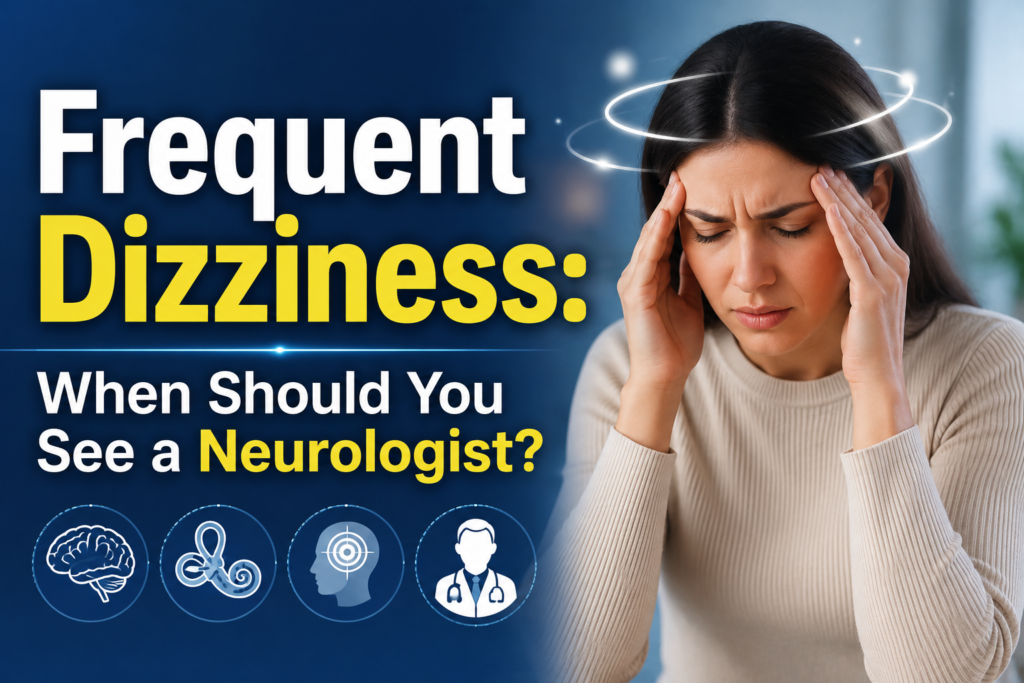
Frequent Dizziness: When Should You See a Neurologist?

Frequent dizziness is a symptom that many people experience at some point in their lives. While occasional dizziness may result from dehydration, fatigue, or standing up too quickly, repeated or persistent episodes should never be ignored. In some cases, dizziness may be a sign of an underlying neurological disorder affecting the brain, nerves, or balance

Frequent Dizziness: When Should You See a Neurologist? Read More »

What causes burning sensation in feet

Burning Sensation in Feet: Possible Neurological Causes

Burning Sensation in Feet is a common symptom that can range from mild discomfort to severe pain. While it may sometimes result from standing for long periods or wearing ill-fitting shoes, persistent burning in the feet often signals an underlying neurological condition. Nerve disorders such as peripheral neuropathy, diabetic neuropathy, vitamin B12 deficiency, and spinal

Burning Sensation in Feet: Possible Neurological Causes Read More »

Scroll to Top