Myths and Facts About Epilepsy are important to understand because misinformation can create fear, discrimination, and unnecessary stigma around this neurological condition. Epilepsy affects people of different ages and can influence their daily activities, education, work, and relationships. However, with appropriate medical care and awareness, many people with epilepsy can manage their condition and lead fulfilling lives.
Understanding the difference between common misconceptions and medical facts can help people respond safely during seizures, support affected individuals, and recognize when professional medical attention is needed.
What Is Epilepsy?
Epilepsy is a neurological disorder characterized by an enduring tendency to experience recurrent seizures. Seizures occur because of abnormal electrical activity in the brain and can affect movement, awareness, sensation, or behaviour.
Not every seizure means a person has epilepsy. A seizure may also occur because of temporary medical problems, such as low blood sugar or certain acute illnesses.
Epilepsy can develop during childhood, adulthood, or older age. Its causes may include genetic factors, brain injuries, infections, stroke, or structural changes in the brain. In some cases, the exact cause remains unknown.
10 Common Myths and Facts About Epilepsy
Myth 1: Epilepsy Is a Mental Illness
Fact: Epilepsy is a neurological disorder, not the same as a mental illness.
It affects the brain’s electrical activity and can cause different types of seizures. Although some people with epilepsy may also experience mental health challenges, epilepsy itself should not be confused with a psychiatric disorder.
Myth 2: Epilepsy Is Caused by Supernatural Forces
Fact: Epilepsy is a medical condition that requires appropriate assessment and treatment.
Historically, misconceptions about epilepsy have contributed to stigma and delayed medical care. Scientific evidence identifies several possible causes, including genetic factors, brain injuries, infections, and structural abnormalities.
Seeking medical advice rather than relying on unproven remedies can help people receive appropriate care.
Myth 3: Every Seizure Involves Shaking and Falling
Fact: Seizures can occur in several forms, and not all involve visible convulsions.
Some seizures may cause a person to stare blankly, stop responding briefly, experience unusual sensations, or become confused. Others can cause stiffening, jerking movements, or loss of awareness.
Recognizing these different symptoms is important because some seizures may be mistaken for daydreaming or unusual behaviour.
Myth 4: You Should Put Something in a Person’s Mouth During a Seizure
Fact: Never put anything inside a person’s mouth during a seizure.
A person cannot swallow their tongue during a seizure. Placing a spoon, fingers, food, or other objects in the mouth can cause injury, choking, or breathing difficulties.
Instead, move dangerous objects away, protect the person’s head with something soft, and stay with them until the seizure ends.
Myth 5: Epilepsy Is Contagious
Fact: Epilepsy cannot spread from one person to another.
You cannot catch epilepsy by touching someone, sharing food, sitting beside them, or providing first aid during a seizure.
People with epilepsy deserve the same respect, friendship, and opportunities as everyone else. Correcting this misconception helps reduce unnecessary fear and social isolation.
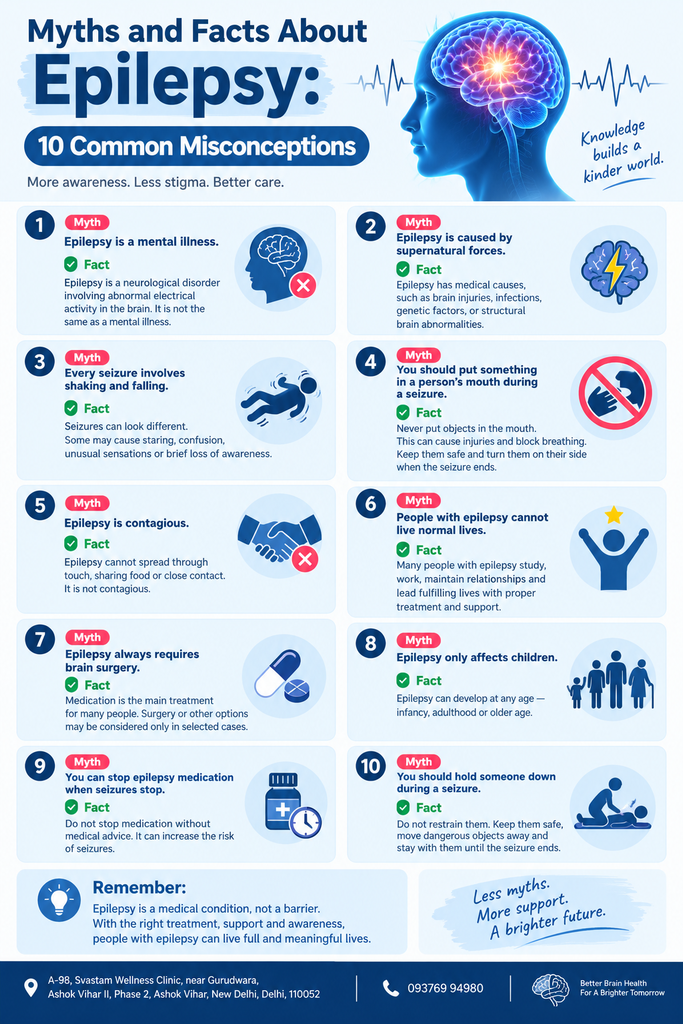
Myth 6: People With Epilepsy Cannot Live Normal Lives
Fact: Many people with epilepsy study, work, maintain relationships, and participate in everyday activities.
With an appropriate treatment plan and suitable safety precautions, many individuals can manage their seizures effectively. Some may need additional support depending on seizure frequency, treatment response, and other health conditions.
Epilepsy should not automatically prevent someone from pursuing personal, educational, or professional goals.
Myth 7: Epilepsy Always Requires Brain Surgery
Fact: Medication is the main treatment for many people with epilepsy.
Anti-seizure medicines help control seizures in many patients. If seizures continue despite appropriate trials of suitable medications, a specialist may evaluate the person for drug-resistant epilepsy and consider options such as surgery, dietary therapy, or nerve stimulation.
The appropriate treatment depends on the seizure type, its cause, and the individual’s overall health.
Myth 8: Epilepsy Only Affects Children
Fact: Epilepsy can develop at any age.
Some forms begin in childhood, while others appear during adulthood or later life. In older adults, causes may include stroke, brain injuries, and other neurological conditions.
New seizure-like episodes should always receive medical assessment, regardless of age.
Myth 9: People Can Stop Epilepsy Medication When Seizures Disappear
Fact: Medication should never be stopped without medical guidance.
Seizures may become well controlled with treatment, but this does not necessarily mean the underlying tendency has disappeared. Suddenly stopping anti-seizure medication can increase the risk of seizures.
A neurologist may consider gradually reducing medication in selected patients after evaluating their seizure history and other risk factors.
Myth 10: You Should Hold Someone Down During a Seizure
Fact: Never restrain someone or attempt to stop their movements.
Trying to hold a person down can cause injuries. Instead, focus on keeping them safe until the seizure ends.
Move nearby furniture or sharp objects away, cushion their head, loosen tight clothing around the neck, and time the seizure. When possible, gently turn the person onto their side as the convulsions end, especially if they are unconscious or drowsy.
What Should You Do When Someone Has a Seizure?
Knowing seizure first aid can help prevent injuries and ensure the person receives appropriate care.
Follow these essential steps:
- Stay calm: Remain with the person and note when the seizure begins.
- Protect them: Move dangerous objects away and place something soft under their head.
- Avoid restraint: Do not hold down their arms or legs.
- Keep the mouth clear: Never insert objects, fingers, food, or water into their mouth.
- Support recovery: When the seizure ends, check their breathing and gently place them on their side if they are not fully alert and it is safe to do so.
- Stay until recovery: Reassure the person as they regain awareness.
When is emergency help necessary?
Call emergency services if a seizure lasts five minutes or longer, another seizure begins before the person recovers, breathing or waking is difficult afterward, a serious injury occurs, or it is the person’s first known seizure. Seek urgent help if a seizure occurs in water.
How Is Epilepsy Diagnosed?
A doctor evaluates the person’s symptoms, medical history, and description of the episodes. Information from a witness can also be helpful.
Depending on the situation, investigations may include:
- Neurological examination: To assess movement, reflexes, and other neurological functions.
- Electroencephalogram (EEG): To record electrical activity in the brain.
- MRI or CT scan: To look for structural brain abnormalities when indicated.
- Blood tests: To investigate possible metabolic or other medical causes.
No single test is sufficient to diagnose every case of epilepsy. The results must be interpreted alongside the person’s clinical history.
Can Epilepsy Be Treated?
Yes. Many people achieve good seizure control with appropriate treatment.
Treatment options may include:
- Anti-seizure medications: Commonly used to prevent or reduce seizures.
- Epilepsy surgery: An option for selected patients whose seizures originate from an area that can be safely treated surgically.
- Dietary therapy: A medically supervised ketogenic diet may help certain patients.
- Nerve stimulation: Devices such as vagus nerve stimulation may be considered for selected cases.
Regular follow-ups are important to monitor treatment effectiveness, manage side effects, and review any changes in seizure patterns.
When Should You Consult a Neurologist?
Consult a neurologist if you or someone in your family experiences a first seizure, repeated episodes of unexplained loss of awareness, or seizures that continue despite prescribed medication.
Medical evaluation is also important when seizure symptoms change, medication causes troublesome side effects, or episodes interfere with everyday activities.
A first seizure requires prompt medical assessment, even if the person recovers quickly. Emergency symptoms require immediate care rather than waiting for a routine appointment.
Frequently Asked Questions
1. Can epilepsy be cured permanently?
Some people achieve long-term seizure freedom, while others need ongoing treatment. The outcome depends on the type and cause of epilepsy and the person’s response to treatment.
2. Is epilepsy contagious?
No. Epilepsy cannot be transmitted through physical contact, sharing food, or close interaction.
3. What should you never do during a seizure?
Never put anything in the person’s mouth, restrain their movements, or give food, water, or oral medication while they are not fully alert.
4. Can stress trigger seizures?
Stress may contribute to seizures in some people with epilepsy, often alongside factors such as inadequate sleep or missed medication. Triggers vary between individuals.
5. Should epilepsy medication be stopped when seizures stop?
No. Medication changes should be made only under medical supervision because stopping treatment abruptly can trigger seizures.
6. Which doctor treats epilepsy?
A neurologist evaluates and treats epilepsy. Some patients may benefit from assessment by an epilepsy specialist, particularly when seizures are difficult to control.
7. When should a seizure be treated as an emergency?
Seek emergency help if a seizure lasts five minutes or longer, repeated seizures occur without recovery, breathing is difficult afterward, a serious injury occurs, or it is the person’s first known seizure.
8. Can people with epilepsy exercise and play sports?
Many people with epilepsy can exercise and participate in sports. Activities should be selected according to seizure control and individual safety risks, with appropriate precautions for swimming, heights, and other potentially hazardous activities.
Conclusion
Understanding the Myths and Facts About Epilepsy helps replace fear and misinformation with accurate medical knowledge. Epilepsy is a neurological condition that can affect people of any age, but it is not contagious, does not always involve convulsions, and does not automatically prevent someone from living a fulfilling life.
Recognizing seizure symptoms, learning correct first aid, following prescribed treatment, and seeking timely medical advice can make a meaningful difference. If you or a loved one experiences seizures or unexplained episodes of altered awareness, consult a qualified healthcare professional for appropriate evaluation and care.
Related Blogs
Frequent Dizziness | Early Signs of Stroke | Common Migraine Triggers| Common Causes of Seizures| Migraine Treatment Options| Causes of Numbness| Burning Sensation in Feet| Symptoms of Peripheral Neuropathy|Parkinson’s Disease| Migraine vs Headache